Question 1: The US government should institute formal policy that bars overseas sales of systems that provide targeted Internet surveillance if such systems are used to violate human rights or freedom of speech (such as the current internet censorship in China).
Google, an American based company, is known for helping Internet users find websites and general information. If there is something one is unsure of, we can use the phrase, “just Google it”! Is it right for an American based company to “violate human rights or freedom of speech”? To continue my example, Google is expanding oversees to China and they are agreeing to comply with Chinas censorship, even though that is against our rights as Americans. After looking at the history of Google on the Google website I found the Google mission statement, which is “Google’s mission is to organize the world‘s information and make it universally accessible and useful”(Google). After reading their statement it sure doesn’t seem like they would branch to China and then censor their products. To answer the original question, I do believe that the US Government should be able to keep businesses like Google from selling their products to other countries if it means violating human rights. We as Americans are one hundred percent about freedom of speech and human rights, and if American companies are then agreeing to censor material in other countries we are no better than them. I believe that this is going against everything we stand for and isn’t right.
Yet, in Google’s argument is they are reportedly “the second-most widely used information-gathering service in China after that of Baidu, a Chinese company, and is the least censored, according to one study”(Figliola 7). After reading an excerpt from “U.S. Initiatives to Promote Global Internet Freedom: Issues, Policy, and Technology”, I also learned that when searching on Google in China and a page is blocked, it doesn’t just say error, it just says that by the Chinese laws one is unable to view this web page, so the searcher knows there is more information, but the Chinese government is just not allowing it. I personally think that shows that Google obviously does not agree with the laws in China. They also claim in a congressional committee that working with China isn’t easy for them. They feel as though the censorship in going against their beliefs. In this case, I still question, why do it then? Overall, I can’t really try to defend Google, because I personally do not agree what they are doing is right, and clearly neither do they. I feel like it is going against the basic nature of us as Americans.
http://fpc.state.gov/documents/organization/148797.pdf
This pdf has a lot of information not only on Googles relations with China, but Yahoo, Cisco and Microsoft.
Question 2: The evolving capabilities to speak out and criticize the Chinese government using microblogs and other Internet social media will lead to more and greater freedoms for the Chinese people.
I was discussing China’s censorship with a friend of mine who is from China, and it helped me form the opinion that in the long run the Chinese people will not gain more freedom from microblogs and other Internet sites. As my Chinese friend, Kahim, put it, with Internet or no Internet, you can’t stop freedom of speech. They still have the capabilities to say way they want, no matter what, they just have to be careful what they say and how they say it, so they do not offend the government in a way that could get them in trouble. Using the social media in a way to criticize the government, I feel, will only lead to less freedom because they will just censor more and more material. After watching a YouTube video provided in class called “Great Firewall of China (Hungry Beast),” it is clear that no matter what new media the Chinese receive they are still significantly held back. For example, if they even upload something to the Internet that the Chinese government doesn’t agree with, their whole computer gets blocked. In this case they are banned in the way in which if they wanted to use certain pictures to put in their microblog that the government felt was offensive they would not be able to do so. Therefore, in this sense they cannot gain more freedoms, they are still just held back. After reading an article on a website titled ChinaVeiw, I almost changed my opinion. In this article it talks about how a man named Ai Weiwei, had an essay he had written censored. It was published in a magazine, and it stated a lot about the government that the government did not approve of. It was then ripped out of the magazines so the Chinese people were unable to view it. Even though the Chinese have the great firewall the article still circulated around online, so people were able to view it. This backs up what I stated earlier, the people are still able to say what they want, the government can only try to stop them to an extent. I am confused on why the government did not censor that article online though. This also proves that the use of the Internet does not necessarily give the Chinese people more freedom, just another way of expressing their opinion.
Overall I feel as though the Internet and microblogs do not give the Chinese people more freedoms. Their rights have not changed at all. They still are not allowed to do certain things on the Internet and if they choose to, they risk the chance of getting censored or what ever else the Chinese government may do. Yes, their horizons have broadened in the way in which they can now express themselves in multiple different ways, but they still have the same laws to abide by, and certain rules to follow. If people continue to ignore these laws and rules, it will only get them in trouble and possibly lead to more laws and more censorship.
Saturday, October 15, 2011

Thursday, September 29, 2011
DS Initial Proposal
To come up with a story based on social justice and digital media you must first thoroughly understand what social justice is and what digital media is, and what they are when you bring them together. Through out the readings we have done in class like “The Ones Who Walk Away From Omelas” by Le Guin, and “The Scope of Social Justice” by Miller, we truly find an understanding of social justice. In Le Guins story you begin to understand a little about social justice, and how it is equal opportunities for everyone. Then in Millers essay you receive a deeper understanding. After these reading you see that social justice is the even distribution of the good and the bad in a society. The good being distributed would include, happiness, jobs, money, opportunity, etc. In a normal world, obviously this is not the case. Now, digital media is a little simpler. Put simply it is the anyway you can connect with other people through the Internet, like Facebook, Twitter, YouTube and news sites the MSNBC and CNN. Each of these sights are ways for people to stay in touch and to stay updated on what is happening in the world. Social justice in digital media is when people are not able to utilize the digital media for whatever reason. For example, in some foreign countries people are unable to have computers and utilize the Internet. That is were the social justice occurs. Why do these people not have these opportunities? With out them they are not fully involved in what is happening all around the world. These people cannot grow with the rest of the world when it comes to gaining new “digital media” skills; therefore they are one step behind everyone else. They may be at a disadvantage but I believe everyone has an opportunity to expand with the rest of the world.
10/27
I plan on discussing what the digital divide is, and examples of it in America and Africa. I will explain what is causing this divide in each country and their similarities will be presented. I also will be informing you of how each country plans on bridging the digital divide.
10/27
I plan on discussing what the digital divide is, and examples of it in America and Africa. I will explain what is causing this divide in each country and their similarities will be presented. I also will be informing you of how each country plans on bridging the digital divide.
Sunday, September 25, 2011
WebLog 6
I just recently started using Twitter. It was my second attempt, since the first time failed. I had no clue what I was doing. I had to ask everyone how to use it. It took me a while to figure out the difference between "re-tweeting" and "replying". I was definitely confused. Once I started spending more time, I got the hang of it. Now it's pretty simple. You just need someone to explain it to you. 21st Century Literacy skills are expanding a lot. It used to just be reading and writing and what not, and now its computers, cell phones, cameras, tvs, iPods, iPads and so much more. Computers are being taught in schools, but I feel as though they are more self learning. Same with everything else, there isn't really anyone to teach you unless you go to best buy or the place where you bought your electronics and the sales person can try. I think it's a lot easier for the younger generation to learn also. The older you are, the less likely you're going to understand all of the new advancements.
Tuesday, September 20, 2011
WebLog 5
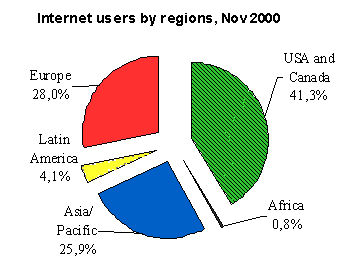
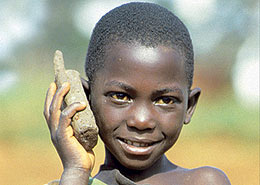
Through out my life I have always been really good with computers. Ever since I got my first computer in first grade, I always was on it just figuring everything out. Even then I would help my parents with things. I wouldn't say I learned much of it from school, half of the time the students knew more than the teachers. As I got older and technology got more advanced, I easily adapted to all of the new advancements. I can easily figure out e-mail, blogs, word processors, and pretty much anything else. When it comes to a digital divide, there is one. Not everyone has the internet or even a computer so they do not have the opportunity to learn like more privileged people.


Friday, September 16, 2011
WebLog 4
After going through "Where Race Lives", I learned a lot about the government policies along with what leads to communities becoming slums. In the 1950s a lot of the government policies led to the minorities receiving unequal treatment. For example Social Security. It provided security and pensions for many workers but it excluded agriculture workers and domestic servants. These minorities were then unable to save, had little chance for pensions and they became more likely to fall into an economic recession.
When I was growing up, the area I lived in was a nice middle class area, and as I got older it really started going down hill. My family and friends all believed it was due to the people moving into the area and we all eventually moved away, and that was that. After reading “Where Race Lives,” I realized it wasn’t entirely due to the people moving in, it was do to the people thinking the minorities moving in would cause the neighborhood to decline, and therefore, moving out. This caused the housing process to decline, causing more lower income families to move in, leading to taxes going up. The community starts getting poorer and poorer leading to public services to suffer since not as many people can afford to use them. Leading eventually to rock bottom. I never knew all of this went into the deconstruction of a community.

When I was growing up, the area I lived in was a nice middle class area, and as I got older it really started going down hill. My family and friends all believed it was due to the people moving into the area and we all eventually moved away, and that was that. After reading “Where Race Lives,” I realized it wasn’t entirely due to the people moving in, it was do to the people thinking the minorities moving in would cause the neighborhood to decline, and therefore, moving out. This caused the housing process to decline, causing more lower income families to move in, leading to taxes going up. The community starts getting poorer and poorer leading to public services to suffer since not as many people can afford to use them. Leading eventually to rock bottom. I never knew all of this went into the deconstruction of a community.

Wednesday, September 14, 2011

Tuesday, September 6, 2011
WebLog 3
Throughout Miller's "The Scope of Social Justice", he covers mainly what social justice is and how social justice works in a society and social justice in welfare and freedom. Each of these ideas correlates with my two contrasting theories of social justice in Le Guins short story, "The One's Who Walk Away From Omelas." These theories were based on the people who stayed in Omelas, which did not have concern for the social justice, and those who left Omelas, who were more "socially just."
In the beginning Miller discussed more of what social justice is, which is "how the good and bad things in life should be distributed amongst the members of a human society(Miller 1)." For something to be unjust it would mean that a person/persons would have less advantages than one "ought" to have. After stating this, I will return to the ideas from Le Guins short story. At the end of the story you find out how one little child is left locked in a dirty basement with nothing. He is left there to bear all of the sadness of the society on his shoulders. This, according to Miller's definition, would clearly be unjust. The good and bad is not being evenly distributed, the bad is being solely placed on one little child, while everyone else in the town is enjoying all of the advantages they receive due to the suffering of the little child.
When it comes to social justice in the society it requires everyone in the society to cooperate. Which in the case of Omelas, everyone does cooperate, yet it is still not socially just, due to the fact of that one little boy. When it comes to the advantages and disadvantages being evenly distributed I will return to Miller's writing. He gives the example of people who live below the poverty line. Is that just? Even when it comes to people who are living above the poverty line, yet, do nothing to aid those who are homeless and in need. Clearly, in Omelas, everyone is living better than the little boy, and none do anything to help. Even those who agree it is wrong, they still opt to leave the city instead.
Welfare and freedom are also two concepts brought up in Miller's writing. First to touch on welfare, Miller states how out of all of the different advantages which should be regulated in a socially just society, like money, property, jobs, etc., none are personal welfare( happiness ). He states, "social justice has to do with the means of obtaining welfare, not with welfare itself (Miller 7)." In this case, it almost makes social justice seem rather materialistic. It the things that are distributed that are meant to make us happy, and if they don't, that is in no ones control, since that is psycological. Connecting that with Omelas, does that neccesarily make the little boys situation unjust? It may or may not, depending on how you look at it. It is unjust in the way that he does not receive equal advanteges or opportunities, yet just in the way that he could try to make the most of what he as, which is obviously a slight extreme. Going back, we look at how he doesn't have the same opporunites, which correlate with freedom. Miller discusses "whether and when lack of resources constitutes a constraint on freedom (Miller 13)." In Omelas, the little boy is locked up, therefore has no way of leaving his hell. This society is in no way a just society. The little chid is forced to recieve all of the burdens of everyone else, and is in no means able to escape and revieve the fiar distribution. This is due to the fact that the people of Omelas would rather have all of the advantages and none of the disadvantages. Even though this society is meant to perfect and just, as long as that little child is suffering, it never will be.
In the beginning Miller discussed more of what social justice is, which is "how the good and bad things in life should be distributed amongst the members of a human society(Miller 1)." For something to be unjust it would mean that a person/persons would have less advantages than one "ought" to have. After stating this, I will return to the ideas from Le Guins short story. At the end of the story you find out how one little child is left locked in a dirty basement with nothing. He is left there to bear all of the sadness of the society on his shoulders. This, according to Miller's definition, would clearly be unjust. The good and bad is not being evenly distributed, the bad is being solely placed on one little child, while everyone else in the town is enjoying all of the advantages they receive due to the suffering of the little child.
When it comes to social justice in the society it requires everyone in the society to cooperate. Which in the case of Omelas, everyone does cooperate, yet it is still not socially just, due to the fact of that one little boy. When it comes to the advantages and disadvantages being evenly distributed I will return to Miller's writing. He gives the example of people who live below the poverty line. Is that just? Even when it comes to people who are living above the poverty line, yet, do nothing to aid those who are homeless and in need. Clearly, in Omelas, everyone is living better than the little boy, and none do anything to help. Even those who agree it is wrong, they still opt to leave the city instead.
Welfare and freedom are also two concepts brought up in Miller's writing. First to touch on welfare, Miller states how out of all of the different advantages which should be regulated in a socially just society, like money, property, jobs, etc., none are personal welfare( happiness ). He states, "social justice has to do with the means of obtaining welfare, not with welfare itself (Miller 7)." In this case, it almost makes social justice seem rather materialistic. It the things that are distributed that are meant to make us happy, and if they don't, that is in no ones control, since that is psycological. Connecting that with Omelas, does that neccesarily make the little boys situation unjust? It may or may not, depending on how you look at it. It is unjust in the way that he does not receive equal advanteges or opportunities, yet just in the way that he could try to make the most of what he as, which is obviously a slight extreme. Going back, we look at how he doesn't have the same opporunites, which correlate with freedom. Miller discusses "whether and when lack of resources constitutes a constraint on freedom (Miller 13)." In Omelas, the little boy is locked up, therefore has no way of leaving his hell. This society is in no way a just society. The little chid is forced to recieve all of the burdens of everyone else, and is in no means able to escape and revieve the fiar distribution. This is due to the fact that the people of Omelas would rather have all of the advantages and none of the disadvantages. Even though this society is meant to perfect and just, as long as that little child is suffering, it never will be.
Subscribe to:
Posts (Atom)